7 Brand Risks Companies Face During High-Profile Events Like the FIFA World Cup
High-profile events create distinct reputational pressures for brands. Learn which risks are most likely to emerge, where early signals appear, and how to prepare before the world is watching.



When brands prepare for high-profile events, most of the focus goes on the visible parts: sponsorships, campaign rollouts, global activations. What tends to get less attention is how differently things move once the event starts. Issues that would normally stay contained can reach millions of people in hours. A local complaint becomes a customer service story. A few comments in one market can rapidly expand into a reputational threat — often before the brand’s internal team has finished assessing whether to escalate at all.
The brand reputation risk signals that precede those moments are almost always detectable before the crisis is obvious. We spoke with Rebecca Clifford, Specialist Intelligence Analyst at Resolver, who has spent years tracking the signals that precede brand crises across platforms, languages, and markets that most PR, communications, and marketing teams are not resourced to watch proactively.
“You might see a couple of comments that, in the everyday swing of things, you would probably pass over. It is not until you see three or four more along the same line that you start to realize something is building, and then you go back and find where it really started.”
Ahead of the 2026 FIFA World Cup, her team has been monitoring related risk signals for several months across social platforms, online communities, global media, and audience sentiment. From the Olympics to Coachella, here are the seven risk areas where she sees signals form most consistently when the world is watching.
1. Cultural misalignment across markets
An image, phrase, or campaign message that passes review in one market can register very differently somewhere else. Global events amplify this because brands are suddenly operating across dozens of countries, languages, and cultural expectations simultaneously, and audiences from all of those markets are paying close attention to the same content at the same time. The earliest warning signs are usually a handful of comments in a region outside the brand’s primary monitoring focus, or a thread within a community posting in a non-English language that does not trigger any alerts.
Automated tools detect volume spikes. Recognizing when a conversation is shifting toward a reputational pattern requires understanding the source, the cultural context, and the trajectory of the signal before volume justifies action. By the time it does, audiences have often already decided what the brand meant and changing that perception becomes a challenge for brand teams.
 |
Key takeaway: Brands need multilingual visibility across markets before campaigns launch, early signals often surface from unexpected sources. Catching them quickly is essential to understanding and shaping how your brand activity lands. |
2. Brand ambassador and athlete scrutiny
Once an athlete becomes attached to a global campaign, everything about them enters the spotlight: past social posts, political opinions, personal controversies, fan rivalries. Those conversations move across Reddit, YouTube, fan forums, and short-form video at speeds that outpace a brand’s ability to monitor and respond.
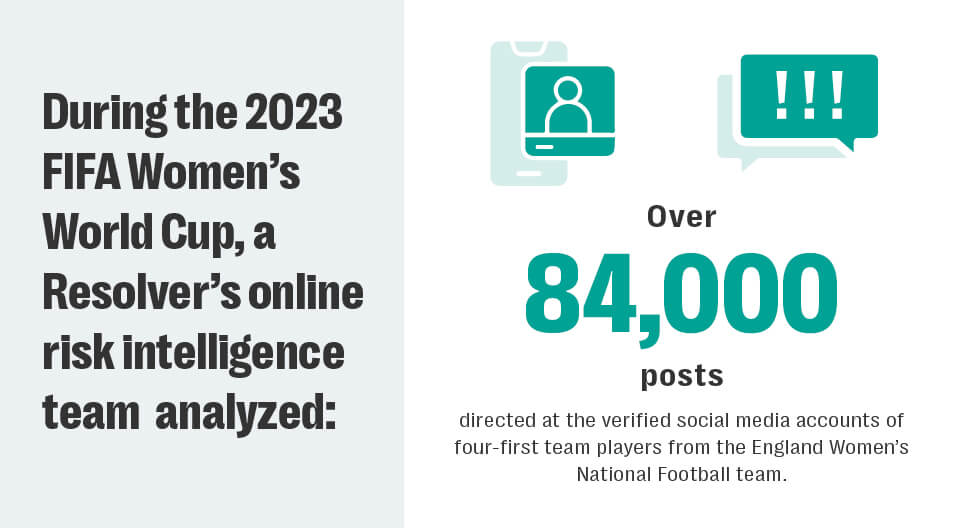
Previous Resolver analysis found that online abuse toward athletes increased significantly during match-day events, with personal attacks, hate speech, and reputational accusations among the most common forms of harmful content.
Non-credible claims are a specific risk at major events, where competing fan communities will sometimes spread negative narratives about opposing ambassadors regardless of factual basis. A few posts can carry a story into mainstream conversation faster than a brand can coordinate a response.
“There are people internationally that nobody has really heard of until they suddenly become attached to a huge sponsorship or campaign,” says Clifford. “Then everything about them gets pulled into the spotlight at once.”
|
Key takeaway: Vetting a partner before signing is not the same as understanding how their public narrative is evolving once global visibility increases. Teams need ongoing monitoring of ambassador-related conversation throughout the campaign, across the platforms where fan communities and media actually operate. |
 |
See how Strategic Intelligence Reports could help your teamYou’re flooded with alerts. But what do they mean? See how comms teams use Strategic Intelligence Reports to find patterns, benchmark risks, and plan smart. |
3. Geopolitical association risk
Global events never unfold in isolation, and the brands attached to them inevitably absorb some of the surrounding conversation, even when it has nothing to do with their own actions. Operational challenges, policy debates near venues, and disruptions in host-city planning are not brand stories, but brands visible around the event still operate inside the same public narrative.
Audiences do not always separate an event’s controversies from the organizations that sponsor it. Campaigns or activations launched around highly charged moments carry a higher risk profile than activity in a neutral window, and managing that risk requires real-time visibility into event-level sentiment, not just pre-event planning.
|
Key takeaway: Monitoring sentiment around the event itself is as important as monitoring conversation about your own brand, particularly during moments with active geopolitical pressure. |
4. Operational risk and local backlash
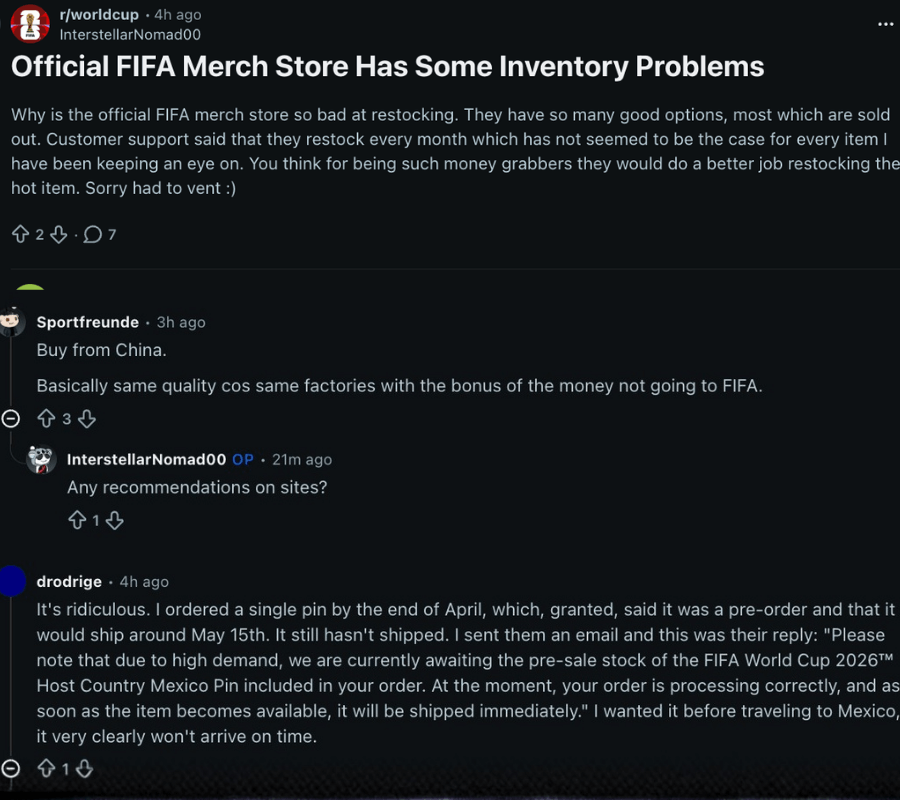
Audiences at major events rarely separate their overall experience from their perception of the brands attached to it. A transportation failure, a customer service breakdown, or a merchandise problem can become part of a wider public conversation quickly, and the most visible brands in that environment often absorb a share of the frustration regardless of whether they were responsible.
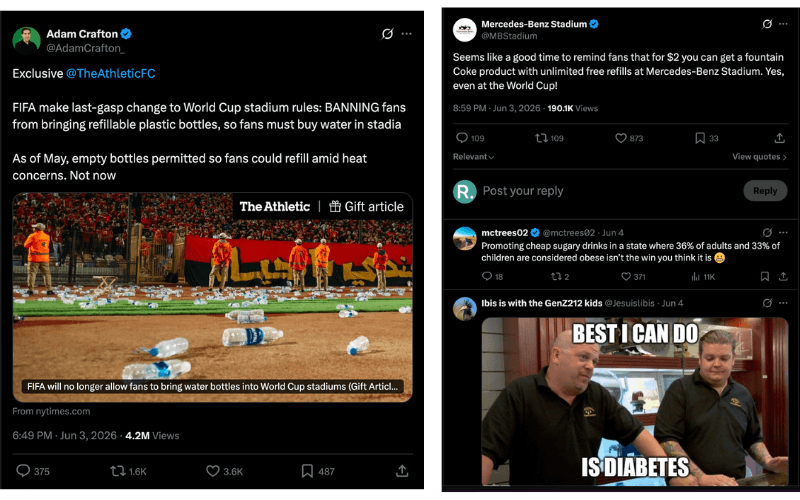
Social media posts showing fan reactions to World Cup stadium policies, including restrictions on water bottles and discussions about food and beverage affordability.
The World Cup spans three countries, multiple legal systems, and tens of millions of fans moving across host cities in a compressed period. Host cities have already faced funding delays, infrastructure pressure, and public complaints around ticket pricing. Local communities dealing with those disruptions do not always direct frustration at organizers. The most visible brand in the vicinity frequently becomes the target.
5. Supply chain and sourcing risk
Most brands scrutinize their campaign messaging carefully before a major event. Fewer apply the same scrutiny to where their products come from, who made them, and whether that story can withstand a global audience. High-profile events make supply chain exposure visible faster than most teams can respond, because consumers are already paying close attention and looking for reasons to hold brands accountable.
For brands connected to sponsorships or merchandise, this is compounded by real logistical pressure. For the World Cup, tariff changes and shipping disruption have already added 10- to 14-day delays and 25 to 35 percent higher freight costs for goods moving from Asian manufacturing hubs to North American event sites. Decisions made under that kind of pressure tend to surface publicly at the worst possible moment.
 “We have also seen situations where brands were criticized for underpaying artisans or copying designs rooted in local traditions,” says Clifford. “Those issues may have existed before, but once the attention increases, people start looking much more closely.”
|
Key takeaway: Before activation begins, assess reputational exposure across the full supply chain. The campaign messaging is only one part of what audiences will scrutinize. |
6. Cyber exposure and brand impersonation
Every major global event generates a parallel economy of fraudulent domains, cloned accounts, and phishing campaigns built around the brands and sponsors attached to it. Fans searching for tickets, merchandise, or hospitality packages are actively targeted, and the scams are designed to look like they originate from legitimate sponsors. When a consumer is defrauded through something that appears connected to an official campaign, the brand becomes part of that story regardless of actual involvement.
The scale ahead of the 2026 World Cup makes the risk concrete: in January 2026, more than 4,300 fraudulent FIFA-related domains had already appeared online. In addition, Resolver’s monitoring found that only a minority of official partners and sponsors currently have high-level email authentication protections in place, leaving fans engaging with their campaigns directly exposed to spoofing attacks.
|
Key takeaway: Before activation begins, assess reputational exposure across the full supply chain. The campaign messaging is only one part of what audiences will scrutinize. |
7. Governing body and event association risk
Brands that sponsor major events inherit a share of the public’s feelings about the event itself — including criticism directed at the governing body, the pricing model, the security environment, and the political controversies surrounding it. Audiences rarely separate the sponsors from the broader experience, and frustration with the event has a way of attaching to the organizations most visibly connected to it.
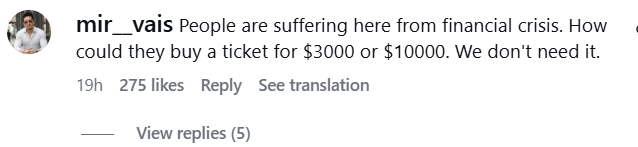
The 2026 World Cup has generated that frustration in volume. Dynamic pricing has pushed the cheapest final tickets above $4,000, with some Category 1 seats approaching $11,000. Fan advocacy groups have filed formal complaints with the European Commission. Sponsors had no involvement in those decisions. That does not change how audiences assign responsibility.
|
Key takeaway: Before activation begins, assess reputational exposure across the full supply chain. The campaign messaging is only one part of what audiences will scrutinize. |
What separates the reactive teams from the resilient ones
In Q1 2025, Resolver analyzed over 12.2 million items across client monitoring programs, averaging 21 minutes from initial detection to executive-ready brief, as reported in the From Risk to ROI report. That kind of coverage is difficult to maintain with small internal teams alone, especially across markets, languages, and fast-moving platforms.
“A lot of good intelligence work is simply making sure the people responsible for responding are not seeing the problem for the first time once everyone else already has.”
The organizations that navigate these environments best tend to share several characteristics:
- Multilingual monitoring that covers the markets their campaigns actually reach
- Visibility across the platforms their audiences are using, not just owned channels
- Clear escalation thresholds that do not require a volume spike before someone acts
- Analysts who can distinguish between noise and a genuine early-stage signal
The brands in the strongest position when the pressure peaks are those that had strong intelligence support to know when and what to act on when the signals were still easy to dismiss.
Assess your monitoring before the tournament starts
If you are responsible for brand risk, communications, or reputational intelligence during major events, Resolver’s Risk Monitoring service gives your team the visibility and analyst support to surface signals before they become headlines.