6 Social Media Monitoring Gaps That Create Pharma Compliance Risk
Patients, HCPs, employees, and influencers engage across more channels than most monitoring programs were designed to cover. Explore six common gaps that can limit visibility and campaign confidence.


Most pharma marketing teams can describe their social media monitoring setup in detail. They can point to brand pages, agency workflows, moderation queues, and social listening dashboards. The question is whether those processes still reflect how patients, healthcare providers (HCPs), employees, and digital opinion leaders (DOLs) actually interact online.
Emma Durant, Strategic Client Partner at Resolver, has spent nearly three decades working in social media and digital strategy, including the last eight years focused on online intelligence and compliant social moderation for pharmaceutical brands. In her experience sitting across the table from marketing directors, pharmacovigilance leads, and agency partners at dozens of organizations, the issue she encounters most often is not a lack of social media monitoring.
“We rarely find organizations that aren’t monitoring anything,” says Durant. “More often, we find gaps between how people interact online and what the review process was designed to cover.”
Why wider social listening creates new pharma risk monitoring challenges
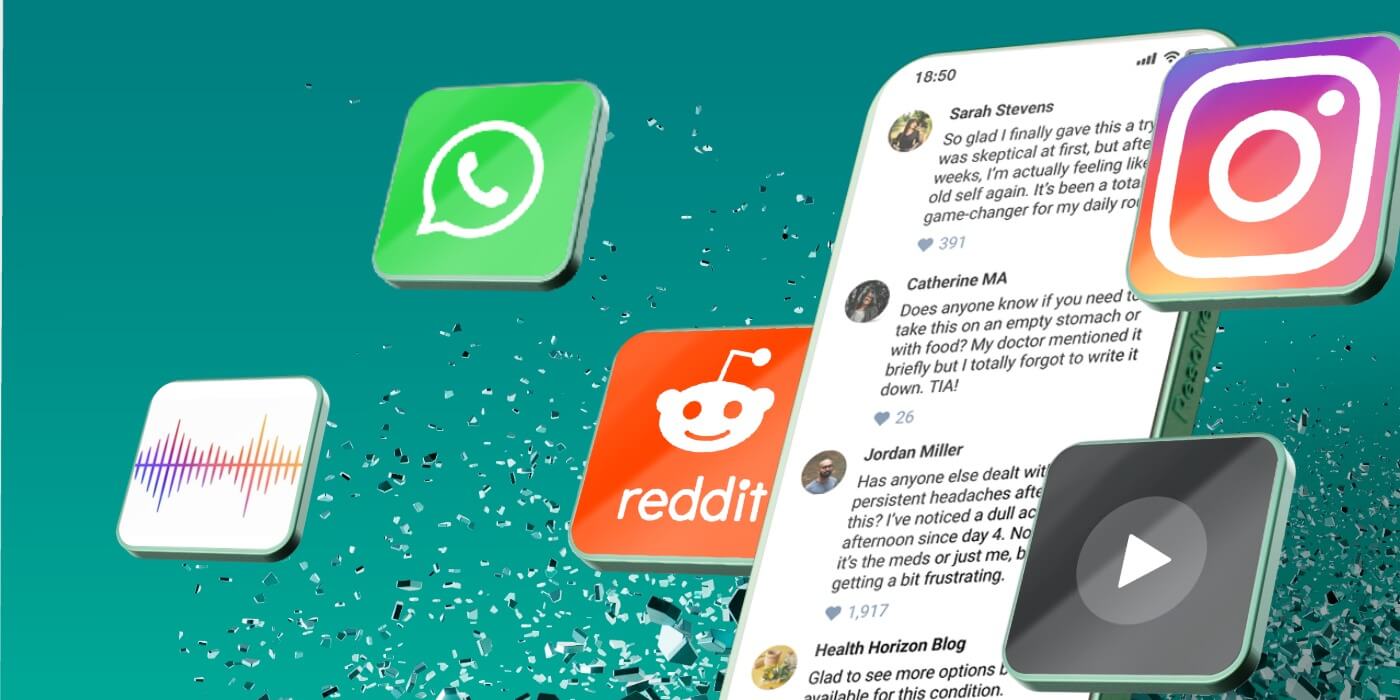
Many review programs were built around owned and sponsored channels because those were the environments organizations controlled. Today, conversations move differently. A discussion can start in a Reddit community, surface in a creator video, continue in a private messaging group, and eventually reach your Instagram comments. By the time it reaches a channel you’re actively reviewing, says Durant, a public discussion about your product — its uses and potential side effects — may already be well established.
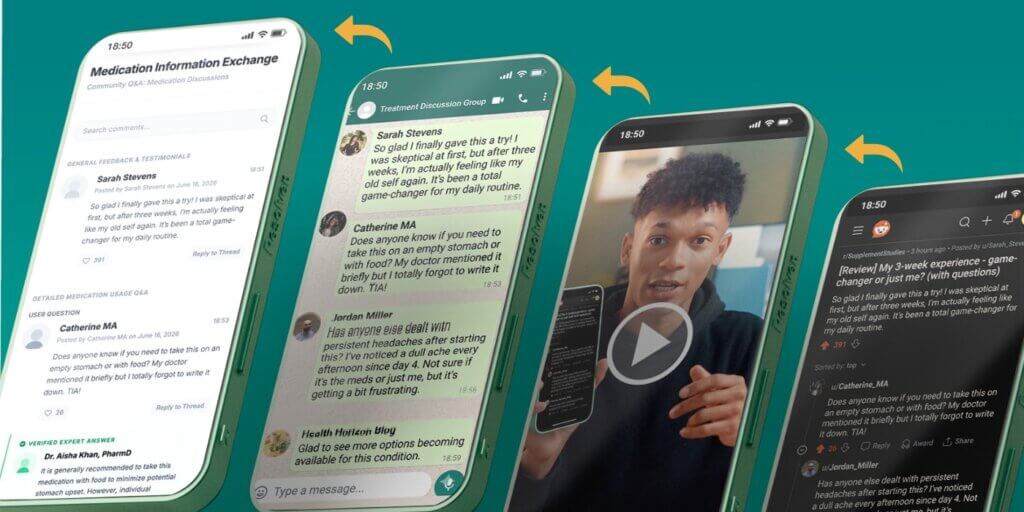
Conversations about treatments rarely stay on a single platform. Discussions often move between communities, messaging apps, video content, and social channels before reaching a brand-owned property.
Those gaps matter because some of the most valuable conversations now happen outside brand-owned channels. Patients discuss treatment experiences in their own words. HCPs ask questions that never reach a sales conversation. Emerging concerns, misconceptions, and shifts in perception often appear long before they reach a channel a brand actively reviews.
At the same time, broader visibility creates broader responsibility. While proactively searching every public conversation on the internet is not a regulatory requirement for adverse event reporting, organizations that intentionally collect and review information from non-owned channels take on additional obligations when potential safety information is identified. Faced with that reality, some teams narrow searches, avoid certain channels, or limit review activity altogether.
The six coverage gaps below frequently emerge when pharmaceutical teams try to expand social media monitoring and social listening beyond owned channels while maintaining a defensible adverse event reporting process.
1. Creator videos and video-first content
Video-first platforms have changed how treatment discussions spread online. Comments on owned or sponsored video content carry the same review obligations as comments on any other owned channel. A growing challenge is that a single piece of content can generate conversation in multiple places. Teams may review the original post and its comments, but the discussion often continues through shares, reposts, stitches, duets, and other forms of audience engagement.
For pharmaceutical brands, those conversations can provide valuable insight into how treatments are discussed, how information is interpreted, and what questions or concerns emerge after content is published. The challenge is understanding whether your monitoring process follows the conversation beyond the original post.
 |
Questions to ask: |
|
2. Employee social media activity
In markets where direct drug promotion is prohibited, employee engagement on company social posts can create regulatory exposure many pharma marketing teams haven’t fully accounted for.
In the UK, a single like, comment, or share on a product-related company post may be treated as unlawful promotion if it makes that content visible in a market where promotion is prohibited. PMCPA enforcement has resulted in formal reprimands and financial penalties for major pharmaceutical companies. Most organizations discover these incidents after the exposure has already happened.
LinkedIn presents the clearest exposure because global posts about treatments, clinical trials, and healthcare topics frequently appear there. The same principle applies to any platform where employees can publicly engage with company content across markets. “Most organizations have put real effort into training employees on what they can and can’t engage with,” says Durant. “The harder problem is that policing it at scale is genuinely difficult, and the regulatory exposure is there regardless of whether the engagement was intentional.”
|
Questions to ask: |
|
3. DOL campaigns
Most pharma marketing teams have strong approval processes before Digital Opinion Leader or influencer content goes live. Many have less mature processes after publication. Comments, replies, reposts, and audience discussions can quickly become the most active part of a campaign.
“We often see organizations devote significant attention to content approval,” says Durant. “The discussion that follows receives much less attention.” Questions about treatment experiences, side effects, product access, and medical information often appear after the original post has been reviewed and approved.
For organizations working with contracted DOLs, those conversations may create adverse event reporting obligations that require documented review and escalation processes. They can also provide valuable insight into how audiences interpret information, what questions remain unanswered, and which concerns emerge once content reaches a broader audience.
|
Questions to ask: |
|
For a deeper look at managing digital opinion leader compliance, see our guide to high-stakes influencer marketing.
4. Reddit and patient communities
Reddit, patient forums, and disease-specific communities often reveal conversations that never reach a brand-owned channel. Patients use everyday language to discuss treatment experiences, compare therapies, navigate access challenges, and share concerns with peers.
Unlike brand-owned channels, these discussions typically take place in independent communities beyond a manufacturer’s direct control. For marketing and brand teams, they can provide some of the most valuable audience and competitive intelligence available, often surfacing emerging concerns, treatment perceptions, and unmet needs long before they appear in traditional research or owned-channels.
“With the right process in place, you can do wider listening without any restrictions on what you’re looking for,” says Durant. “Because when an adverse event surfaces, the process handles it.”
|
Questions to ask: |
|
5. WhatsApp and messaging platforms
Pharma brands have found a practical use for WhatsApp that has little to do with social media in the traditional sense. Rather than manage a public channel, they use it to send clinical updates, product information, and event communications directly to hundreds of HCPs at once. This broadcast approach can reach busy healthcare professionals in a channel they already use daily.
According to Durant, the compliance implications often come down to a single setting: replies on or off. A broadcast without replies sits outside the owned-channel obligation. Enable replies, and the communication becomes owned. Messages that come back carry the same adverse event reporting responsibilities as a brand social page.
Some organizations limit this exposure through structured question-and-answer formats rather than open replies. Others enable replies and build monitoring processes around them. Either way, the decision should be deliberate, and the process should reflect it.
|
Questions to ask: |
|
6. Podcasts and audio content
Health and medical podcasts have become a significant source of patient and HCP information, and an increasingly common channel for brands to reach specialist audiences through sponsored appearances, expert interviews, and DOL partnerships.
When a pharmaceutical company agrees to participate in or sponsor an episode, comments associated with that content may require review for potential safety events. Those discussions can occur across YouTube uploads, podcast promotion posts, and other engagement surfaces connected to the episode. What begins as a single sponsorship can create more engagement surfaces to review and document than organizations anticipated or have processes in place to manage.
|
Questions to ask: |
|
How to review your pharma monitoring process
Most pharma organizations already monitor social media. The more useful question is whether their process reflects how people engage today. The six examples above may look like separate channel challenges. In practice, they point to the same underlying issue. Conversations no longer stay within a single platform, format, or audience group. Patients move between communities. HCPs consume information across channels. Discussions continue long after content is published.
As a result, the strongest monitoring programs start with responsibility rather than platforms. For each campaign, ask:
- Which channels does the organization own, control, sponsor, or operate?
- Where can users post comments, replies, or free-text responses?
- Who performs human review?
- How are potential adverse events documented and escalated?
- What records support the review process?
- Which markets and languages are covered after hours, on weekends, and during holidays?
When marketing, pharmacovigilance, legal, and agency partners are working from the same answers, the gaps in coverage become much easier to see — and close.
Build your monitoring process for where audiences actually are
Organizations that recognize these shifts can build review processes that better reflect how people discover, discuss, and share information. Most pharma teams understand where conversations are happening. The harder task is expanding visibility without creating additional review and reporting burdens that the organization cannot support. When resources are limited, the safest option is often to focus on the channels they are already required to cover.
As Durant puts it: “The strongest programs aren’t built around a list of platforms. They’re built around how audiences actually behave.” Organizations that are able to listen more broadly tend to solve a different problem first: they establish clear processes for review, escalation, and documentation. That gives them the confidence to engage with a wider range of channels and conversations without creating unmanaged compliance risk.
 |
Want a deeper look at how leading pharmaceutical companies are approaching broader listening, adverse event detection, and digital engagement? Download our free ebook: More Channels. More Signals. More AI. How Pharma Teams Engage Confidently |