6 Best Security Incident Management Software Platforms for 2026
Explore the leading security incident management solutions in 2026 that help teams report incidents faster, investigate smarter, and improve risk visibility.

It’s easy to tell when a corporate security incident management process has outgrown the systems behind it. Incident reports end up in spreadsheets, investigations live in email threads, and security leaders spend too much time piecing together what happened after the fact.
That fragmentation creates real operational risk. Over time, security teams lose visibility into patterns, response times, repeat offenders, and the broader impact of their work.
Security incident management software helps solve that problem.
This guide compares seven top security incident management tools in 2026, focusing on platforms built for corporate security, physical security, investigations, loss prevention, and enterprise incident response.
What is security incident management software?
Security incident management software is a platform that helps corporate security teams report, track, investigate, and analyze physical security incidents.
These incidents may include:
- Workplace violence
- Theft and loss
- Suspicious activity
- Trespassing
- Facility threats
- Executive protection events
- Employee misconduct
- Travel safety incidents
- Operational disruptions
IT incident management software is designed for system outages, cybersecurity alerts, service requests, and technical support workflows. In contrast, corporate security incident management software supports human-led operational response. It helps teams document what happened, who was involved, where it occurred, what actions were taken, and what follow-up is needed.
For security leaders, this creates a more reliable source of truth. Teams can use structured data to identify trends, allocate resources, and improve response planning by choosing the right incident management system.
Why security incident management matters in 2026?
Corporate security teams are managing more complex operating environments than ever. Many organizations now exist across multiple sites, regions, business units, and risk profiles. A single team may be responsible for workplace violence concerns, loss prevention, investigations, executive protection, access control issues, and emergency response coordination.
In addition, security incident management is governed by teams that include corporate security leaders, investigators, loss prevention teams, workplace safety professionals, security officers, and cross-functional stakeholders in HR, legal, and compliance.
Meeting the needs of these professionals can become increasingly difficult, as manual processes often yield too limited analytics, and leaders will still need spreadsheets, which can become fragmented.
When incident data is fragmented, security teams struggle to answer basic questions, such as:
- How many incidents happened last quarter?
- Which locations are seeing repeat issues?
- How long does it take to resolve high-priority incidents?
- Which incident types are increasing?
- Where do investigations get delayed?
- What business impact is security helping reduce?
Having readily available answers to those questions matters because corporate security is increasingly expected to operate as a strategic business function. Security leaders need to show how they report data in order to demonstrate how their teams reduce risk, protect people, support compliance, and improve resilience.
Trends shaping security incident management software in 2026
AI-assisted intake is improving report quality
Many incident reports are incomplete because the person reporting the event does not know what details investigators will need later. AI-assisted intake can help guide users through better reporting by prompting for relevant information based on incident type, severity, location, and context.
The evolution of systems of record to systems of intelligence
Historically, incident management software acted as a passive digital filing cabinet used merely to log past events. Today, corporate security teams require active “systems of intelligence” that leverage automation, AI and embedded analytics. These modern security incident management platforms connect seemingly unrelated data points, linking people, locations, and assets, to help investigators uncover hidden patterns and proactively prevent future threats.
Corporate security leaders are no longer just operational managers; they are strategic business partners expected to prove their impact on the bottom line. By leveraging advanced business intelligence, security directors can move beyond basic incident counting to forecast risks, demonstrate clear ROI, justify budgets, and confidently report on organizational resilience to the C-suite.
[H3] Executive visibility is becoming a priority
Corporate security leaders are increasingly expected to explain their team’s business impact. That requires more than counting incidents. Leaders need to show trends, response performance, root causes, recurring issues, and risk reduction.
A new CSO may encounter unexpected challenges, from understanding fragmented data to answering executive questions with confidence. Strong incident management software helps close those gaps by turning operational security data into a reliable leadership tool.
6 top security incident management tools in 2026
1. Resolver
Best for: Enterprise and mid-market organizations with dedicated corporate security, investigations, workplace safety, or loss prevention teams
Resolver goes far beyond standard incident tracking to act as a true intelligence engine for corporate security and investigation teams. Rather than serving as a passive repository for data, Resolver transforms reactive incident reporting into proactive risk management, replacing disparate spreadsheets, email threads, and generic ticketing tools with a highly structured, AI-driven platform.
Resolver supports the full incident lifecycle, from intake and triage to investigation, reporting, and executive visibility. It leverages advanced capabilities such as an AI Intake Agent to streamline reporting and Automated Triage to instantly route and escalate high-priority threats, drastically reducing manual administrative burden.
By connecting the dots between incidents, people, assets, and locations, Resolver provides investigation-grade case management that empowers teams to uncover hidden patterns and systemic risks. Ultimately, the platform equips security leaders with the strategic insights and executive visibility needed to make data-driven decisions and optimize their security posture.
Resolver delivers advanced capabilities like an AI-powered intake agent, automated triage and dynamic playbooks coupled with embedded BI. The platform equips security leaders with the strategic insights and executive visibility needed to make data-driven decisions and optimize their overall security posture.
Key features:
- AI-assisted incident intake
- Guided reporting workflows
- Mobile and offline reporting
- Automated triage and routing
- Dynamic response playbooks
- Investigation and evidence management
- Persons of interest and entity linking
- SLA tracking and escalation
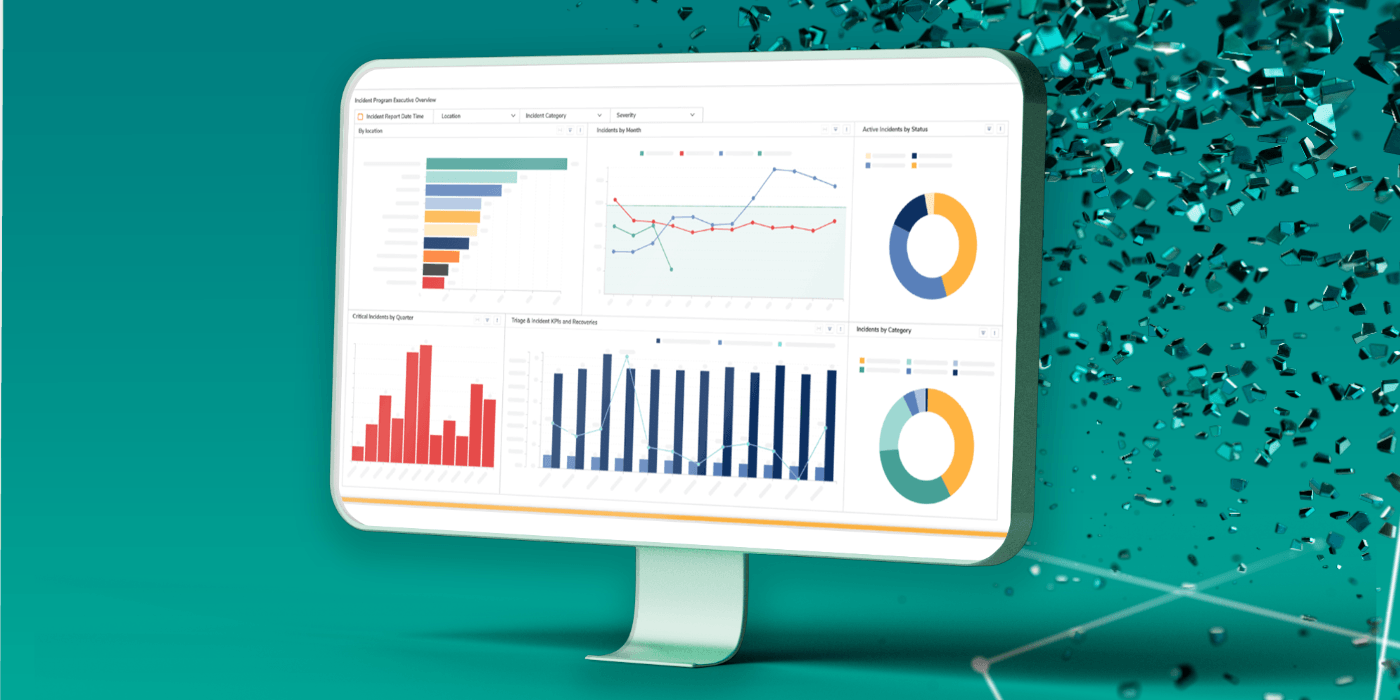
- Executive dashboards and analytics
- Physical security system integrations (HR, IT, physical security systems, BI, and more)
- Role-based access controls
Best fit: Resolver is the ideal solution for organizations that need a scalable, highly configurable, intelligent incident management platform capable of managing complex investigations, uncovering systemic risks, and delivering strategic insights across multiple sites and teams.
Limitations: Resolver may be more advanced than what security incident teams who manage low-volume need.
2. Omnigo
Best for: Public safety, education, health care, and security teams that need incident reporting and dispatch-related workflows
Omnigo provides incident reporting and public safety management software used by security, law enforcement, health care, education, and other organizations. Its platform supports incident reporting, dispatch, records management, analytics, and compliance-related documentation.
Omnigo is often a good fit for organizations that need structured reporting across safety and security operations. It can help teams centralize incident data, improve documentation, and manage day-to-day security activities.
Key features:
- Incident reporting
- Dispatch support
- Records management
- Mobile access
- Compliance documentation
- Reporting dashboards
Best fit: Omnigo may suit organizations with public-safety-style operations or security teams that need a combination of reporting and active dispatch coordination.
Limitations: Confined to localized patrol dispatch, it lacks the deep enterprise investigative tools, AI-powered intake, and open integrations necessary for strategic, global corporate security management.
3. Case IQ
Best for: Organizations focused on investigations and case management
Case IQ offers case management software for investigations, ethics, compliance, HR, fraud, and security teams. Its strength is structured investigation management, helping organizations centralize cases, document findings, and manage sensitive information.
For corporate security teams, Case IQ may be useful when investigations are the primary use case. It supports case files, collaboration, reporting, and documentation workflows.
Key features:
- Case management
- Investigation workflows
- Secure documentation
- Reporting dashboards
- Collaboration tools
- Configurable forms
Best fit: Case IQ may be a fit for organizations that prioritize investigative case management over broader incident response operations.
Limitations: Functionally isolated to internal compliance logging, it lacks the physical security integrations, triage automation, and enterprise-wide security analytics required for active corporate security operations.
4. Ontic
Best for: Organizations focused on protective intelligence, threat management, executive protection, and insider risk
Ontic is a protective intelligence platform designed to help corporate security teams identify, assess, and manage potential threats before they escalate into incidents. The platform is commonly used by organizations seeking to strengthen executive protection programs, workplace violence prevention efforts, insider risk management, and threat assessment workflows.
Ontic combines information from internal and external sources to help security teams build a more complete picture of potential risks. Its capabilities support threat monitoring, case management, intelligence gathering, subject management, and investigative workflows, helping teams move from reactive response to proactive threat prevention.
Key features:
- Protective intelligence and threat monitoring
- Threat assessment and management
- Executive protection support
- Insider risk management
- Investigations and case management
- Subject and person-of-interest tracking
- Intelligence collection and analysis
- Reporting and dashboards
Best fit: Ontic is designed for organizations looking to aggregate external threat data, coordinate protective intelligence, and proactively manage potential threat sources.
Limitations: Highly specialized for threat intelligence, making it too narrow for broader enterprise risk, while complex backend administration limits adoption across other corporate departments.
5. Kaseware
Best for: Organizations managing investigations, intelligence, case management, and threat-related workflows
Kaseware is an investigative case management platform designed to help security, law enforcement, corporate investigations, and intelligence teams manage cases, gather information, and coordinate investigative activities. The platform is often used by organizations that need structured workflows for investigations, threat management, and intelligence operations.
Key features:
- Investigations and case management
- Evidence and records management
- Intelligence gathering and analysis
- Link analysis and visualization
- Threat and incident tracking
- Reporting and dashboards
- Workflow automation
- Collaboration tools
Best fit: Tailored for municipal law enforcement, public safety and investigative units needing a secure records management, and all-in-one evidence management system.
Limitations: Organizations seeking a broad, enterprise-wide platform for general safety reporting, will find Kaseware too specialized. Its heavy emphasis on highly structured workflows, may require additional training for standard users.
6. ServiceNow (SecOps)
Best for: Organizations already invested in ServiceNow (SecOps) and focused on cyber or IT security operations
ServiceNow (SecOps) is a powerful enterprise platform, but it is primarily designed around IT and cybersecurity workflows. It supports security incident response, vulnerability response, threat intelligence, and workflow automation within the broader ServiceNow (SecOps) ecosystem.
For organizations already using ServiceNow (SecOps), there may be value in extending workflows into security operations. However, corporate security teams should be careful not to confuse cyber incident response with physical security incident management.
Key features:
- Security incident response
- Workflow automation
- Threat intelligence workflows
- IT and cyber integrations
- Enterprise reporting
- ServiceNow ecosystem alignment
Best fit: ServiceNow (SecOps) is best suited for organizations managing cyber and IT security workflows, especially those already deeply invested in the ServiceNow platform.
Limitations: The platform can be IT-centric. Physical security, corporate investigations, field reporting, evidence tracking, and executive protection workflows may require significant customization.
Top Security incident management software comparison table
Choosing the right security incident management platform depends on your organization’s priorities, operational complexity, and security maturity.
|
Platform |
Best for |
Strengths |
Limitations |
|
Resolver |
Enterprise corporate security, investigations, and incident management |
Purpose-built for corporate security, AI-assisted intake, comprehensive investigation management, workflow automation, with executive visibility |
May exceed the needs of organizations with limited incident management requirements |
|
Omnigo |
Public safety, healthcare, and security operations teams |
Streamlines daily officer patrols, active dispatch, and localized regulatory reporting. |
Built for tactical response rather than strategic oversight, missing the advanced AI tools and enterprise-wide integrations needed for complex corporate environments. |
|
Case IQ |
Investigation-focused security and compliance teams |
Delivers case management, investigation workflows, secure documentation |
More investigation-centric than full lifecycle security incident management. Less focused on broader security operations, incident response, and physical security program management. |
|
Ontic |
Protective intelligence, executive protection, insider risk, and threat management programs |
Protective intelligence, threat assessment workflows, executive protection support, person-of-interest management, threat monitoring |
More focused on threat management and protective intelligence than broader incident management, operational resilience, or enterprise-wide security operations workflows. |
|
Kaseware |
Security investigations, intelligence operations, and case management |
Investigation management, evidence tracking, intelligence analysis, link analysis, structured investigative workflows |
Designed to meet rigorous public safety standards, the platform’s high level of administrative structure may introduce unnecessary complexity for standard corporate security operations. |
|
ServiceNow (SecOps) |
Organizations with mature IT and cybersecurity programs |
Enterprise workflow automation, extensive integrations, ecosystem alignment |
Primarily designed for IT and cyber incident response rather than physical security management. Physical security workflows may require significant configuration and ongoing administrative support. |
With this in mind, the best security incident management platform is often the one that aligns most closely with your organization’s operational requirements, reporting needs, and security objectives.
What to look for in security incident management software?
Configurable incident intake
Every organization defines incidents differently. A healthcare system, logistics company, bank, and manufacturer may all need to track workplace investigations, but the required data, escalation paths, and reporting obligations may vary.
Look for software that supports configurable intake forms, guided questions, mobile reporting, attachments, anonymous reporting, and incident type-specific workflows.
Investigation management
Incident tracking and investigation management are not the same. Enterprise security teams need tools that support evidence tracking, interview notes, witness statements, persons of interest, task assignments, case summaries, and audit trails.
This is especially important when investigations may involve HR, legal, compliance, or law enforcement.
 |
Top Incident Reporting Software Compared in 2026
Review the top incident reporting software and find the right software for your organization based on reporting, automation, analytics, and ease of use. |
Workflow automation
Strong incident management platforms help teams move from manual coordination to structured response. Workflow automation can route incidents by type, severity, location, or business unit. It can also trigger reminders, escalate overdue tasks, and standardize response steps.
Reporting and analytics
Incident data becomes more valuable when teams can analyze the right security metrics. Look for dashboards that show incident volume, severity, location trends, response times, resolution rates, and recurring issues. Incident data is only as valuable as the strategic intelligence you can extract from it. While basic dashboards track volume and response times, a true system of intelligence leverages data to uncover hidden patterns, forecast emerging risks, and provide executive-level visibility that transforms raw security metrics into proactive threat prevention.
Enterprise scalability
A platform that works for one location may not work across 50, 200, or 500 sites. Enterprise teams need role-based access, multi-site reporting, configurable workflows, integration options, and governance controls.
Practical AI support
AI should support real security workflows. Useful capabilities may include guided intake, incident classification, entity recognition, severity recommendations, case summaries, and triage support.
The key is human oversight. Security teams need AI that accelerates decisions while keeping people in control.
How to choose the right security incident management software?
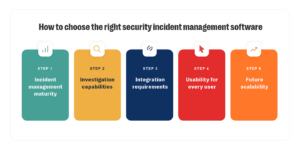
Define your incident management maturity
Before evaluating vendors, understand your current state.
Some organizations are still spreadsheet-driven. Others have a basic reporting tool but lack investigative, analytical, or automated capabilities. More mature teams may need enterprise workflows, integrations, AI-assisted triage, and executive reporting.
Defining maturity helps prevent overbuying or underbuying. A simple tool may be enough for a single-site team. A multi-site enterprise needs an incident management platform that can scale.
Evaluate investigation capabilities
If investigations are part of your security program, do not settle for basic incident tracking.
Ask vendors whether they support evidence management, witness documentation, persons of interest, audit trails, and investigation workflows.
Investigation workflows matter because security cases may be reviewed by HR, legal, compliance, regulators, or external authorities.
Assess integration requirements
Corporate security does not operate in isolation. Incident management software may need to integrate with:
- Access control systems
- Video management systems
- HR platforms
- IT service management tools
- Communication tools
- Business intelligence platforms
- Identity and access management systems
The right integrations reduce duplicate data entry and help teams connect incident activity with broader operational context.
Prioritize usability
A platform only works if people use it. Field teams need fast reporting. Investigators need clear workflows. Leaders need dashboards that do not require manual spreadsheet cleanup.
During evaluation, ask to see the reporting experience from the perspective of a front-line user, investigator, manager, and executive.
Consider future scalability
Your organization may not need every workflow today, but incident management needs often grow over time.
A retailer may expand from 25 locations to 200. A health care system may add new facilities. A manufacturer may centralize security operations across regions. A logistics company may need to standardize reporting across distribution centers.
Choose software that can adapt as your security program matures.
How incident management software helps corporate security teams?
Improve incident reporting consistency
Security incident management software helps standardize reporting with structured forms, required fields, guided intake, and configurable taxonomies. Teams looking to improve the quality of front-line reporting can also build stronger processes around capturing incident data before small reporting gaps become larger visibility problems.
Reduce investigation delays
With incident management software, a report should trigger a structured workflow. The right team members are then notified. Tasks are accurately assigned. Evidence is already attached. Interviews are documented. Escalations are tracked. The case file stays complete from intake to closure.
Identify recurring risks and patterns
Workplace violence prevention and response require consistent documentation, fast escalation, and collaboration across security, HR, legal, and operations.
Security incident management software can help teams link incidents to persons of interest, vehicles, locations, assets, or prior reports. This gives investigators a clearer view of patterns that may not be visible in isolated reports.
Demonstrate security program value
Security teams working to communicate value more clearly can use corporate security ROI to justify budgets, headcount, and technology investments.
Incident management software helps leaders show response times, resolution rates, incident trends, loss reduction, workload, and program impact. This supports more informed conversations with executives and helps reposition security as a strategic business function.
 |
Top Governance, Risk, and Compliance Platforms to Consider in 2026
Review leading GRC software for managing risk, compliance, audits, controls, policies, and reporting across a more connected governance program. |
Real-world examples of security incident management success
Organizations implementing modern incident management programs often improve visibility, standardize reporting, and strengthen investigations across multiple locations.
For example:
- Massachusetts General Hospital used Resolver to modernize its security incident reporting processes across its large, complex healthcare environment. By improving how incidents were captured, tracked, and analyzed, the organization gained greater visibility into security operations, enabling leadership to identify trends, allocate resources more effectively, and make more informed decisions about risk and safety priorities.
- DHL implemented Resolver to standardize incident management across a geographically distributed operation with multiple facilities and stakeholders. By creating more consistent reporting workflows and centralized access to incident data, the organization improved operational visibility, strengthened reporting accuracy, and enabled security teams to respond more efficiently while supporting enterprise-wide decision-making.
These examples reflect a broader industry shift toward centralized, data-driven security operations that improve decision-making and operational resilience.
Why organizations choose Resolver for security incident management?
Organizations choose Resolver because it is built for corporate security and investigations teams, not adapted from IT ticketing or generic workflow software.
Resolver helps teams:
- Capture complete incident data
- Standardize reporting across locations
- Automate routing and escalation
- Manage investigations in one place
- Track evidence and case activity
- Use AI-assisted intake and triage
- Employ AI Case Summarization
- Identify trends and recurring risks
- Report security impact to executives
- Scale workflows across complex organizations
The platform is especially valuable for enterprise and mid-market organizations with dedicated security, loss prevention, workplace safety, or investigations functions.
Resolver also supports the broader shift from reactive reporting to operational intelligence. Organizations can explore Resolver’s corporate incident management software to understand how the platform supports reporting, investigations, and executive visibility. Instead of simply documenting incidents after they happen, teams can use incident data to understand patterns, improve response, and support better business decisions.
Frequently asked security incident management questions
What is security incident management software?
Security incident management software helps corporate security teams report, track, investigate, and analyze physical security incidents. It centralizes incident data, automates workflows, supports investigations, and improves visibility across the organization.
How is security incident management different from IT incident management?
Security incident management focuses on physical and corporate security events such as workplace violence, theft, suspicious activity, facility threats, and investigations. IT incident management focuses on technical issues such as outages, service requests, cyber alerts, and infrastructure problems.
What industries use security incident management software?
It is widely used in retail (theft, workplace violence), healthcare and higher ed (safety incidents, regulatory compliance like OSHA/Clery/Title IX), and manufacturing, financial services, transportation, energy/utilities, government, and hospitality.
A major cross-sector use case is large enterprise corporate security teams handling case management, threat assessment, and global incident visibility for the CSO’s office.
What features should enterprise organizations prioritize?
Enterprise organizations should prioritize configurable intake, investigation management, workflow automation, mobile reporting, analytics, integrations, role-based access, and scalability across locations.
Can incident management software support investigations?
Yes. Strong incident management platforms support investigation workflows, evidence tracking, interview notes, witness statements, persons of interest, task management, case summaries, and audit trails.
How much does security incident management software cost?
Pricing varies by vendor, organization size, number of users, implementation scope, and required capabilities. Most enterprise vendors provide custom pricing.
Security incident management is becoming a strategic business function
Corporate security teams need more than a place to log incidents. They need a reliable way to capture complete data, coordinate response, manage investigations, identify trends, and communicate business impact.
The best security incident management software improves consistency, visibility, and response while giving security leaders the data they need to make informed decisions.
For organizations evaluating security incident management software in 2026, the most important question is not just which tool can track incidents. It’s which platform can help security teams turn incident activity into actionable intelligence.
To see how Resolver helps corporate security teams standardize reporting, improve investigations, and transform incident data into security intelligence, explore Resolver’s Incident Management Showcase.